Accounts Receivable & Collections
Reconcile receivables, prioritize collections, assess customer credit risk, and resolve payment disputes.
Skills in this bundle
Receivables Collector
Generate AR/AP aging reports -- buckets outstanding amounts into Current/31-60/61-90/91-120/120+ days with entity grouping and percentage distribution
Invoice Reconciler
End-to-end invoice 3-way match -- input invoices CSV + POs CSV + receipts CSV, output Excel matching invoice<->PO<->receipt, flagging mismatches in amount/quantity/vendor with discrepancy reasons.
Cashflow Radar
Forecast cashflow horizons (30/60/90 days), category breakdown, confidence intervals.
Bank Risk Radar
Analyze banking/financial datasets for risk: exposure concentration, anomaly detection, risk classification, and a narrated risk report.
Dispute Advocate
End-to-end consumer dispute letter generator -- input case scenario (flight delay/product defect/platform charge/property), output Excel+text with formal complaint letter, escalation path (12315/Heimao/court), and evidence checklist.
See it in action

MCP Nexus chains receivables reconciliation, collection prioritization, customer credit-risk assessment, and dispute handling into one workflow, speeding collections and cutting bad debt.
- Auto-reconciles receivables against invoices, with aging and open items at a glance.
- Prioritizes collections intelligently by amount, aging, and customer risk.
- Assesses customer credit and bank risk to spot high-risk accounts.
- Attributes payment disputes automatically and generates handling advice.
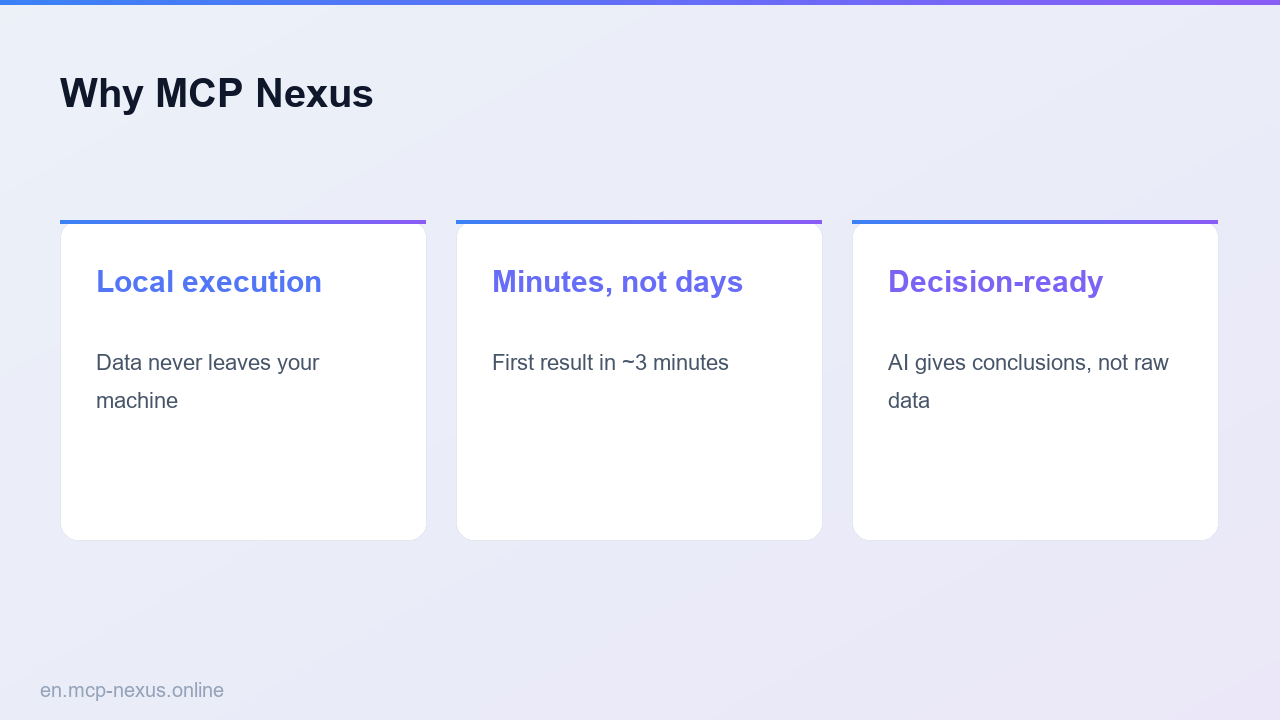
- Runs on your machine; customer and AR data stay in your network with a traceable process.
What is AR & collections with MCP Nexus
Accounts receivable management and collections reconciles open items, analyzes aging, prioritizes collection, and manages risk to speed cash and cut bad debt. MCP Nexus chains receivables-collector, invoice-reconciler, cashflow-radar, bank-risk-analyzer, and dispute-advocate to automate reconciliation, prioritization, risk assessment, and dispute handling. It suits AR accountants, credit management, and treasury, running fully on-premises.
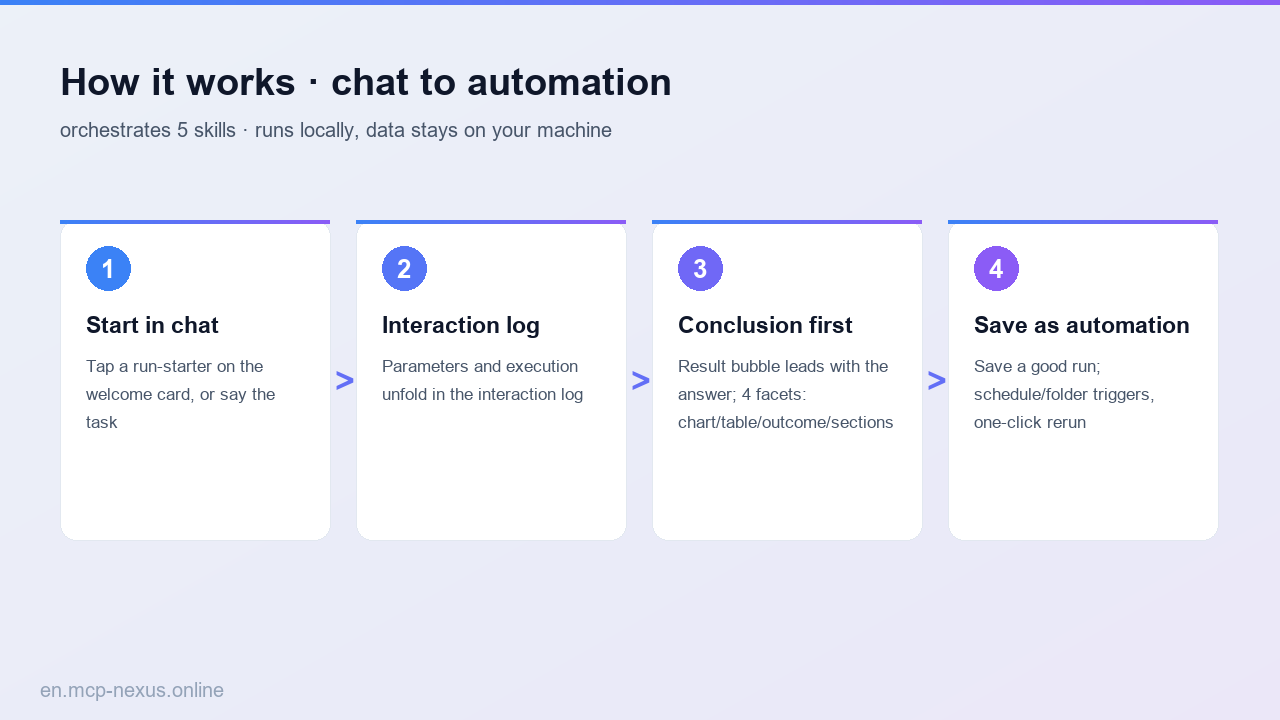
How it works
MCP Nexus vs alternatives
| MCP Nexus | Manual / Excel | Generic AI / Cloud tools | |
|---|---|---|---|
| Pricing | Free tier, metered by calls | Many AR/credit-officer hours | Per-seat plus per-volume fees |
| Local execution | Yes, data stays on-premises | Manual process | No, data leaves your network |
| Prioritization | Risk-based, intelligent | Manual, by gut | Varies by plan |
Real use cases
FAQ
Which AR data is supported?
AR ledgers, invoices, and receipt records (Excel/CSV), auto-reconciled into aging and open-item lists. All processing runs locally.
How is collection priority ranked?
By a combination of amount, aging, and customer risk, prioritizing high-value, high-risk accounts, with configurable and explainable ranking.
How is customer credit risk assessed?
bank-risk-analyzer assesses credit risk from payment history and cash-flow health, flags high-risk accounts upfront, and supports terms advice.
How are payment disputes handled?
dispute-advocate attributes dispute types (amount, quality, documents) and provides handling advice and scripts, shortening resolution.
How is data security ensured?
Everything runs on your machine; customer and AR data never leave the network, with private deployment and a traceable collection process.